
Blog
-
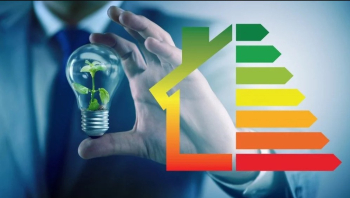 A Guide to the European Energy Label for Lighting
At YPHIX, energy efficiency is at the heart of everything we do. That is why our product portfolio consists exclusively of high-quality LED lighting solutions that comply with the latest European requirements for energy performance and ecodesign.
The European Energy Label helps consumers and professionals compare the energy performance of light sources quickly and easily. Thanks to the standardised A-to-G rating scale, the energy efficiency of lighting products is transparent and easy to understand.
What is the European Energy Label?
The energy label for light sources is governed by the European Energy Labelling Regulation (EU) 2019/2015. In addition, lighting products must comply with the Ecodesign Regulation (EU) 2019/2020, also referred to as the Single Lighting Regulation (SLR).Together, these regulations promote the development of increasingly energy-efficient lighting products while providing consumers and businesses with reliable information to make sustainable purchasing decisions.
-
 THE LATEST ABOUT EVERYONE’S FAVORITE: LED STRIPS
The latest about everyone’s favorite: LED strips
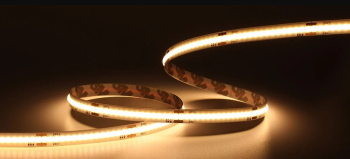
It’s no secret that LED strips have become immense popular. Although usually not directly in sight, LED strips are all around us. This versatile bestseller is everyone’s favorite. The Yphix LED strip assortment consists of an extensive range of high-quality and flexible LED strips for any application inside and outside. Our latest addition are the Yphix COB LED strip series. Here is the latest and greatest about Yphix COB LED strips:The advantages of COB LED strips
LED strips that shine over a short distance on a surface, may not evenly illuminate that surface. That is because regular LED chips are placed at a certain distance from one another. The greater the distance between the LED chips, the less even a surface may be illuminated. A profile with a milky white cover is typically used to reduce this effect. The light will be distributed a bit more diffusely.If you want a completely smooth light line, then choose a COB LED strip from Yphix.
-
 IN THE SPOTLIGHT: YPHIX LICENSED BY SIGNIFY’S ENABLED
Yphix is officially a licensee in Signify’s EnabLED licensing program for LED luminaires and Retrofit Bulbs.
As a licensee Yphix may use Signify’s patented technologies in its LED where needed, and leverage Signify’s thought leadership and expertise in LED. The program allows Yphix to speed up and increase cost effectiveness in product development, reduce time to market and increase resource flexibility.
The benefits for Yphix customers are clear: Yphix will remain focus on product development and innovative LED solutions, and will make use of the EnabLED program patented technologies where needed. As an independent brand and stock-holding supplier we are proud to set our own course, always balancing innovation and product development with design, consistent quality, ease of use and affordability.
The program covers over 600 inventions, which have resulted in more than 4.700 granted patents and over 200 pending patent applications. These relate to basic LED controls through to system-level
-
 HOW TO SELECT THE CORRECT IP VALUE FOR LED LIGHTING
Most LED lighting comes with a IP value. But what does it mean and how to ensure the selection of the correct value?
What IP stands for:
IP stands for: Ingress Protection, or protection against the ingress of solid and liquid substances. The value consists of two digits. The first digit says something about the protection against the ingress of, for example, dust and objects. The second digit indicates the protection against liquids. Together, the figures indicate to what extent the housing of an electronic device or fixture is protected against environmental influences.
General LED lighting inside a home typically does not require extra protection. IP20 is sufficient in most cases. But bathroom and outdoor lighting generally requires a higher IP value.
What the digits in IP values represent:
FIRST DIGIT (FROM 0 TO 6): PROTECTION AGAINST OBJECTS & DUST.
IP0X: Not protected
IP1X: Protected against hand contact (solid objects larger than Ø50 mm)
IP2X: Protected against finger contact (solid -
 NEED TO KNOW ABOUT THE NEW EU LIGHTING REGULATIONS
The EU prepared the next steps toward efficient and climate-friendly lighting. The aim is to advance the circular economy and provide clear, transparent and standardized information for consumers.
The new regulations on ecodesign and energy labeling have become compulsory from September 2021. Rules on ecodesign for lighting products are mandatory for all manufacturers and importers wishing to sell in the EU.
What are the new rules on eco-design and energy labeling?
Ecodesign:
All light sources must fulfill stricter requirements with regard to energy efficiency as well as specific quality criteria. There are new minimum requirements for lumen efficacy, lumen maintenance, survival factor, flicker and stroboscopic effect. The new regulations also prescribe efficiency requirements for LED control gear, which was not included in previous regulations.
Energy labeling:
The new regulation on the energy labeling of light sources defines rescaled energy efficiency classes (A to G) and requires registration
-
 CONSIDERATIONS FOR SELECTING THE COLOR TEMPERATURE (KELVIN)
What is color temperature?
Color temperature refers to how warm or cool light appears. It is about the shade of white light emitted. It is about whether a bulb produces a warm visual effect like an incandescent lamp, or a cooler effect like fluorescent tubes. It is not about actual colored light such as RGB or party lights. And it is not about temperature in terms of how much heat the bulb generates.Color temperature is measured in Kelvin (K) – the lower the number, the warmer the white light appears, while a higher Kelvin will appear cooler. Color temperature for LED light generally ranges from 1800-2400K (extra ambiance), to 2400-2900 (extra warm white), 2900-3500K (warm white), 3500-5000K (white) and 5000-6500K (daylight white).
Choose the correct color temperature based on the application
The color temperature depends on the type of lighting for which the lamp is used. In workplaces, where bright light is required, a higher Kelvin value is often used. 3000K to 4000K are typically